






I opened Blidz expecting another shopping app built around quick bargains, but its approach feels more social and game-like than a standard marketplace. It is a free shopping app from Blidz, aimed at people who enjoy browsing promotions, collecting rewards, and deciding together whether a deal is worth pursuing. My experience was less about searching for one exact product and more about moving through a chain: notice an offer, inspect the conditions, involve other people when useful, and then decide whether the saving justifies the effort.
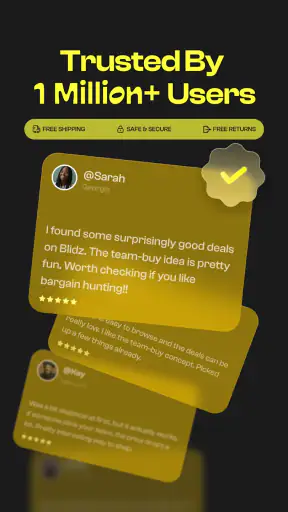
That distinction matters. If I already know the precise item, brand, size, and delivery terms I want, a conventional retailer is usually more direct. Blidz makes more sense when I am open to discovering something, comparing a promotion with the normal alternatives, and treating the shopping process itself as part of the entertainment. The app has built a substantial audience, with more than a million installs, a 4.3 average from roughly 188 thousand ratings, and about 35 thousand written reviews. Those figures suggest that the format has found an audience, although popularity alone does not remove the need to read each offer carefully.
From casual browsing to a purchase decision
Starting with the right expectation
The first useful adjustment is to stop thinking of Blidz as a simple replacement for a department-store app. Its store summary focuses on shopping, savings, social shopping, rewards, and promotions, and that combination explains the experience better than the short store description, which is simply “Blidz.” I found the app most engaging when I approached it as a deal-discovery tool rather than a personal catalog of items I had already decided to buy.
That starting condition changes how much patience I need. I can browse when I have a few spare minutes, notice products I would not have searched for directly, and then decide whether one deserves closer attention. This is useful for inexpensive household items, accessories, gifts, and impulse-friendly purchases. It is less suitable for urgent needs, highly specialized equipment, or anything where I need a guaranteed specification before I begin.
The mature age classification is important here. Blidz is marked Mature 17+, so I would not treat it as a shopping environment for children or as something to hand over casually to a younger family member. The presence of promotions and rewards can encourage extra browsing, and a responsible user should set a budget before getting absorbed in the offer flow.
Reading an offer before chasing the saving
My most important habit was to inspect the complete offer rather than reacting to the headline. A low-looking price can be attractive, but the real question is what I must do to reach that outcome. I look at the product details, the conditions attached to the promotion, the final checkout amount, and whether the item is genuinely useful to me. This prevents the common mistake of treating a discount as a saving even when I would not have bought the product otherwise.
A practical workflow is to create a short mental filter before tapping into an offer. I ask whether I know the intended recipient, whether the product has a clear everyday use, and whether I would still consider it at a nearby price from a familiar retailer. If the answer is no, the reward mechanics are probably doing more work than the product itself. That is not a flaw unique to this app, but Blidz’s social and promotional framing makes the filter especially valuable.
I also compare the complete cost with ordinary alternatives. A familiar retailer may provide a simpler checkout, clearer delivery expectations, easier returns, or a larger selection of established brands. Blidz can win when the promotion is compelling and the process remains straightforward; it loses when a small apparent saving is offset by uncertainty, extra steps, or a product that is difficult to evaluate from the listing.
A realistic evening shopping scenario
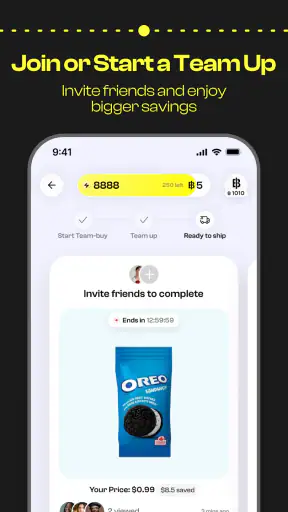
Imagine I need a small gift for a colleague but have no fixed brand in mind. Instead of opening a conventional retailer and typing a narrow search, I browse Blidz for ideas. I notice a suitable-looking accessory, check its details, and send the offer to a friend who knows the recipient’s taste. The friend’s reaction becomes a useful handoff: I am no longer judging the item in isolation, but I still remain responsible for checking the final terms before paying.
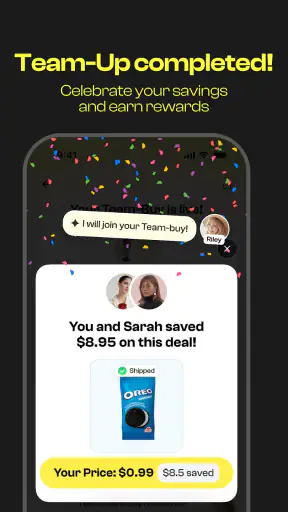
If the offer survives that check, I continue toward checkout. If the friend thinks it looks cheap or impractical, I move on without having spent much time. This is where the social angle adds value: it can turn a vague browsing session into a quick second opinion. The trade-off is that involving another person adds coordination. When I am shopping for a time-sensitive purchase, that extra exchange may be less helpful than simply using a retailer with a familiar product page and delivery process.
Where rewards help and where they distract
Rewards and promotions can make repeated browsing feel more worthwhile, particularly for users who enjoy discovering deals rather than completing one planned transaction. I found them most useful as a reason to return to an offer I was already considering. I would not use them as a justification to buy something unnecessary.
My tip is to separate the product decision from the reward decision. First decide whether the item, total cost, and conditions make sense. Only afterward consider whether a promotion improves the deal. Reversing that order makes it easy to chase a reward and lose sight of the purchase. This two-stage check is one of the simplest ways to keep the app entertaining without letting it steer the budget.
Understanding the handoffs
The app’s workflow involves several handoffs, even when they happen inside one screen. The promotion hands off to the product information, the product information hands off to the social decision, and the social decision hands off to checkout. Each transition is a point where I need to slow down. A deal can look appealing in a discovery feed but become less attractive once I examine its conditions or compare it with a standard listing elsewhere.
Sharing an offer with another person is helpful when the decision is subjective. Gifts, décor, clothing choices, and novelty items benefit from a second opinion. It is less useful for a purchase where the key criteria are technical compatibility or exact measurements; in those cases, I would rather use a specialist retailer with detailed specifications and established support.
There is also a handoff from browsing to payment. I treat this as a deliberate stop, not an automatic continuation. I review the cart, confirm that I selected the intended variant, and check the final amount before authorizing anything. The app is free to install, but it includes purchases priced from $12.99 to $39.99 per item, so I would keep payment decisions separate from the excitement of a promotion.
What the developer and version tell me as a user
Blidz is developed by Blidz, and the current version is 6.8.53. I mention that because app behavior can change over time, especially in a shopping service built around promotions and rewards. When I review an offer, I focus on what is visible in the current app rather than assuming that an older explanation of the experience still applies.
The app supports Android 7.0 and newer, which makes it accessible to users with a range of older Android devices. That broad compatibility is convenient, but people using aging hardware should still expect the usual practical concerns: slower loading, less comfortable scrolling, or difficulty switching between the app and a messaging service while sharing an offer. A newer phone is not required by the stated minimum, but a smoother device can make a social shopping workflow less frustrating.
Getting from interest to outcome
The outcome I want is not simply a completed order. It is a purchase that still feels sensible after the promotional excitement has faded. To reach that outcome, I use Blidz in a sequence: browse with an open mind, pause on a promising item, inspect its conditions, ask for a second opinion when the purchase is subjective, compare the overall value with familiar alternatives, and then check out only if the result remains convincing.
This process is more effective for flexible shoppers than for people who dislike uncertainty. Someone who enjoys finding an unexpected bargain may appreciate the app’s mixture of shopping and social interaction. Someone who wants a predictable list of products, a fast reorder button, and no promotional detours may feel that Blidz adds work rather than removing it.
I also like the app more for planned browsing than for emotional browsing. If I open it with a category in mind and a spending limit, the promotions become useful prompts. If I open it late at night with no purpose, it is easier to drift from one offer to another. That is a behavioral limitation rather than a missing feature, but it affects the real value of the service.
Where the flow breaks
The workflow breaks first when the offer is not transparent enough for a quick decision. Any shopping app becomes tiring when I need to reconstruct the real value from several conditions. My response is simple: if I cannot explain the deal to myself in one clear sentence, I do not treat it as a bargain yet.
It also breaks when social participation becomes a requirement rather than an advantage. I may be willing to ask a friend for an opinion, but I do not want every purchase to depend on someone else being available. For solo shopping, a conventional retailer can be better because the path from search to payment is usually more self-contained.
Another weak point is product confidence. Discovery-oriented shopping is enjoyable when the item is low-risk, but I would be cautious with anything where quality, fit, compatibility, or after-sales support matters more than price. In those situations, specialist stores and established marketplaces generally offer a more dependable research process. Blidz can still help me spot an idea, but I would not automatically make it the final source for every category.
The mature rating and in-app purchase structure also mean that household users should set clear boundaries. I would not let a child browse unsupervised, and I would keep purchases behind the appropriate account controls. Promotions are easier to manage when the person tapping the checkout button understands the total cost and has already decided on a limit.
Who should use it, and who should skip it
I would recommend Blidz to deal hunters who enjoy browsing, people who like getting a friend’s opinion before buying, and shoppers who are comfortable trading a little convenience for the chance to discover a promotion. It can also suit someone looking for casual gift ideas, provided that the final product details and cost are checked carefully.
I would point a different shopper toward a conventional retailer if the purchase is urgent, needs exact specifications, or depends heavily on reliable brand support. I would also skip it if I know that reward-driven browsing makes me spend more than planned. No discount is useful when it changes a considered purchase into an unnecessary one.
After using it as a complete workflow rather than merely scrolling through deals, my view is balanced. The app’s strength is the combination of discovery, social input, and promotions. Its weakness is that those same elements can add friction and encourage decisions based on excitement instead of need. My practical recommendation is to use Blidz with a purpose, a spending limit, and a final comparison against ordinary shopping options.
For the right person, that makes the experience enjoyable and occasionally rewarding. For me, it works best as a secondary shopping destination: a place to find ideas and possible savings, followed by a careful check before I commit. I would install Blidz for that discovery role, while keeping a more traditional retailer available whenever certainty and speed matter more than the fun of the hunt.


